How to track loans and borrowed items
You lend a book to a friend, a drill to a neighbour, a camping stove to your brother. Three months later, you can't remember who has what. This guide covers a practical system for tracking what you've lent out, so things actually come back.
The problem with lending things
Most people don't lose things. They lend them. A pressure washer goes to a neighbour for the weekend and you forget about it. A book gets passed along at work and neither of you remembers. A set of fairy lights goes to a friend for a party and quietly becomes theirs.
The issue is rarely malice. It's that both sides forget. The borrower forgets they have it, and the lender forgets they lent it. Without a record, the item just drifts away.
What gets lent out most
Some categories are especially prone to the lending black hole.
- Power tools. Drills, sanders and pressure washers are expensive, used now and then, and everyone knows someone who has one.
- Books. The classic. Lent with enthusiasm, never returned, never chased.
- Kitchen equipment. Slow cookers, stand mixers and bread makers. Lent for one recipe and forgotten.
- Camping and outdoor gear. Tents, sleeping bags and cool boxes. Lent once a year, stored somewhere nobody remembers.
- Games and entertainment. Board games, video games, cables and adapters.
- Baby and kids' stuff. Car seats, highchairs and toys. Often lent in bulk and hard to keep track of piece by piece.
Log it when you hand it over
The only reliable moment to record a loan is when the item leaves your hands. If you think "I'll note it down later", you won't. It takes ten seconds. Note who has it, today's date and when you'd like it back.
A return date matters more than you'd think. It gives you a natural prompt to follow up, and it sets a clear expectation for the borrower. "Whenever you're done" is generous, but it usually means "never".
Keep contact details with the loan
If you're lending to someone outside your close circle, like a colleague, a friend of a friend or another parent from school, note a phone number or email next to the name. Six months from now, "Dave from football" might not be easy to reach.
Check your outstanding loans regularly
A monthly glance at what's currently out on loan catches things before they become awkward. It's much easier to send a friendly message after two weeks than after six months. The longer you leave it, the harder the conversation gets, and the more likely the borrower has genuinely forgotten.
How to ask for things back
Chasing a loan feels awkward, and that is the main reason people don't do it. A few things help.
- Set a return date upfront. Then the follow-up is a reminder, not a confrontation.
- Be specific. "Could I get the hedge trimmer back this weekend?" works better than "Do you still have my stuff?"
- Give a reason. "I need the drill for a job next week" gives the other person a prompt to act without feeling accused.
- Don't wait. The longer an item is out, the harder it is to bring up. A week is easy. Three months is painful.
When to just say no
Some items aren't worth the risk. Anything very expensive, sentimental, or hard to replace is better kept at home. It's fine to say "I'd rather not lend that one out" and most people understand. If you do lend high-value items, make sure you have a record of it, including photos of the item's condition before it left.
Using an app to track loans
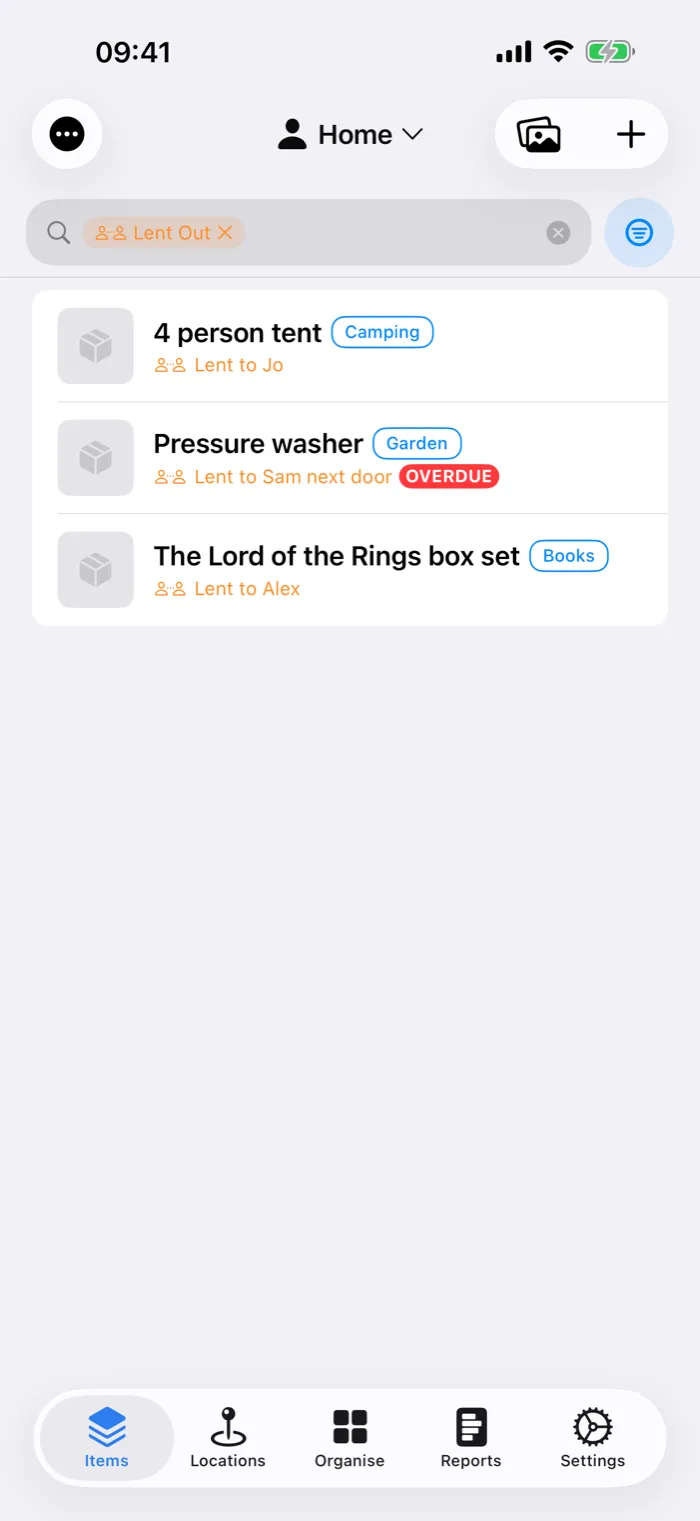
A dedicated inventory app is a reliable way to track loans, because the item and the loan live in the same place. You can see at a glance which items are currently out, who has them, and whether they're overdue.
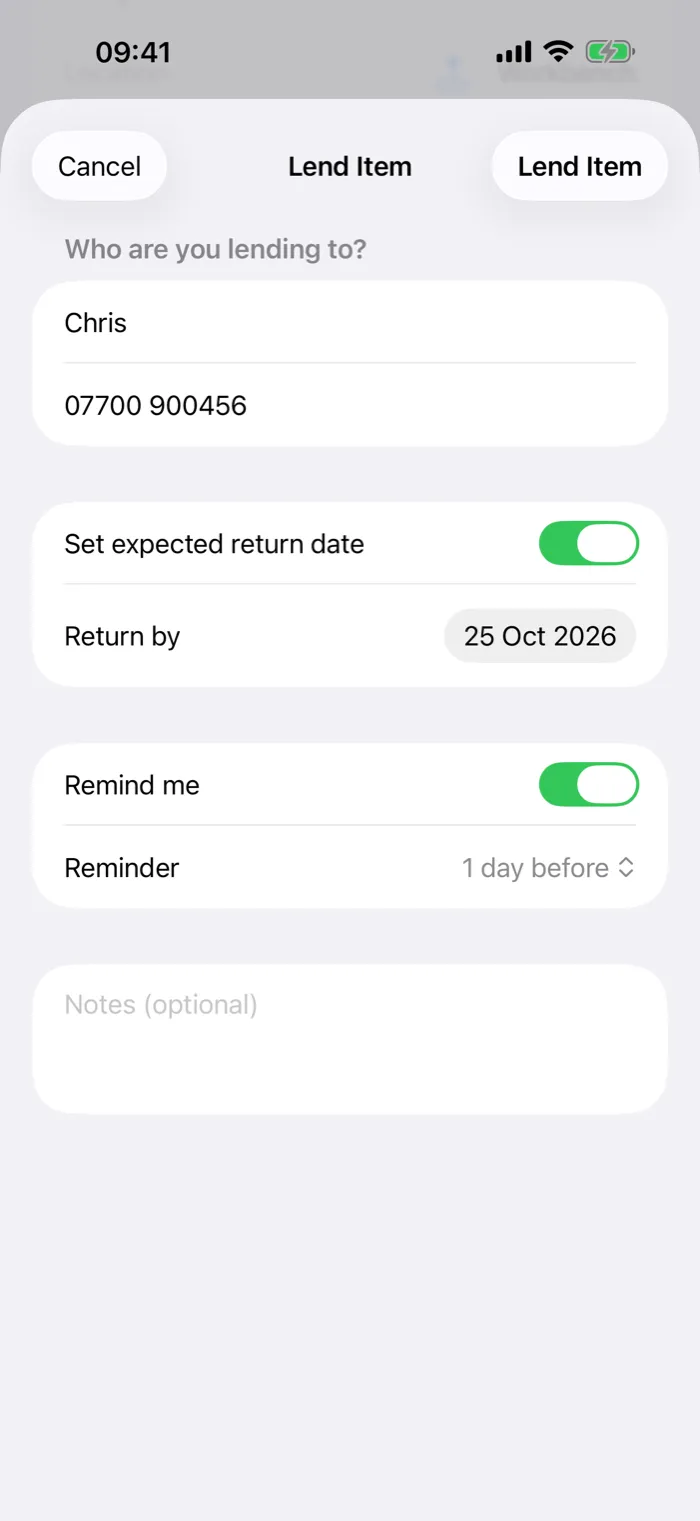
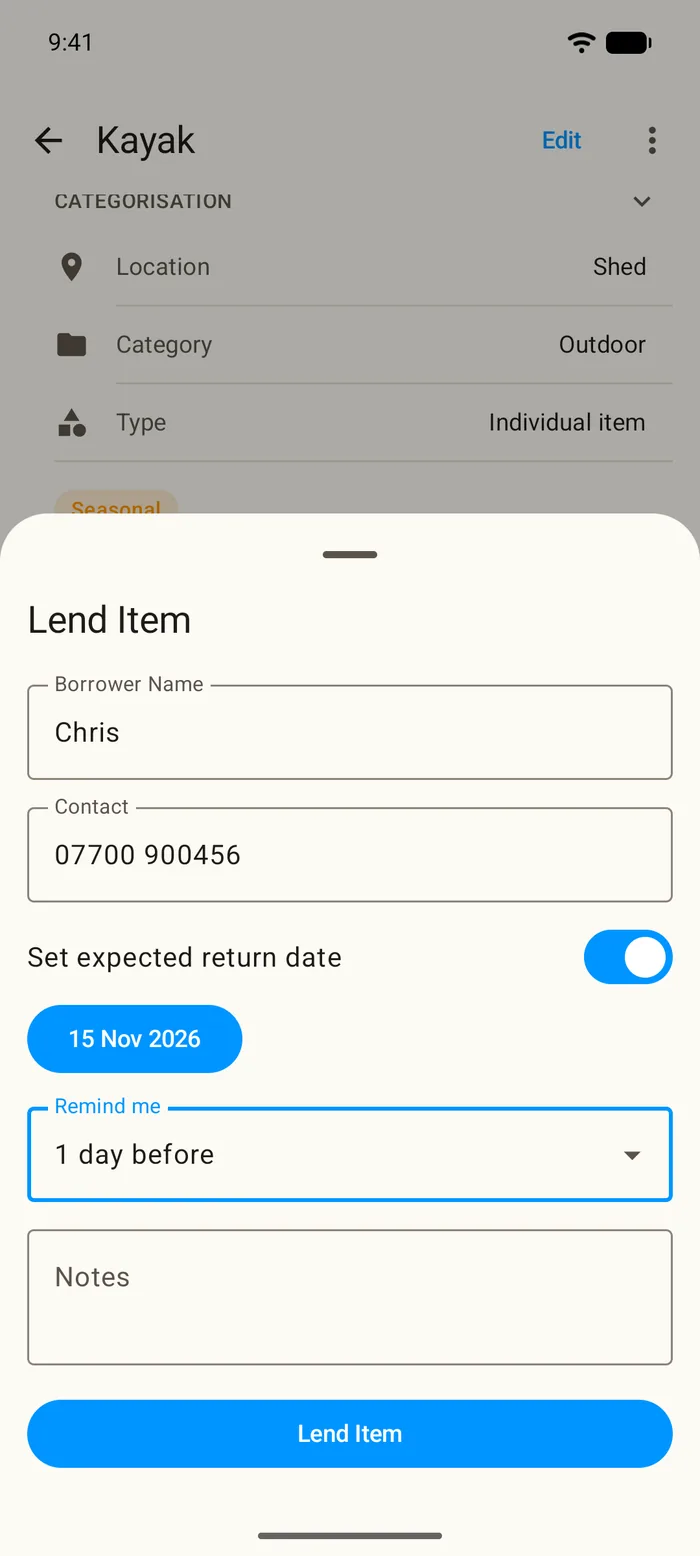
In additem.to, lending something takes a few seconds. Open the item, tap Loans to open that section and tap Lend Item. Enter the borrower's name, add a return date if you want one, and the loan is recorded. There's an optional field for their contact info too. To see everything that's out, tap the filter button next to the search box on the Items list and choose Lent Out. The Lent Items report in Reports lists the same items with overdue ones flagged, and can be shared as a PDF. When something comes back, open the item and tap Mark as Returned.
A note on your phone, a spreadsheet or just trusting your memory works for one or two items, but it falls apart beyond that. That's especially true if people often borrow from you.
additem.to is a free app for iPhone and Android for tracking your belongings. Mark any item as lent, record who has it and when it's due back, and see all your outstanding loans in one place. Overdue items are flagged automatically.
Download on the App Store Get it on Google Play